Introduction
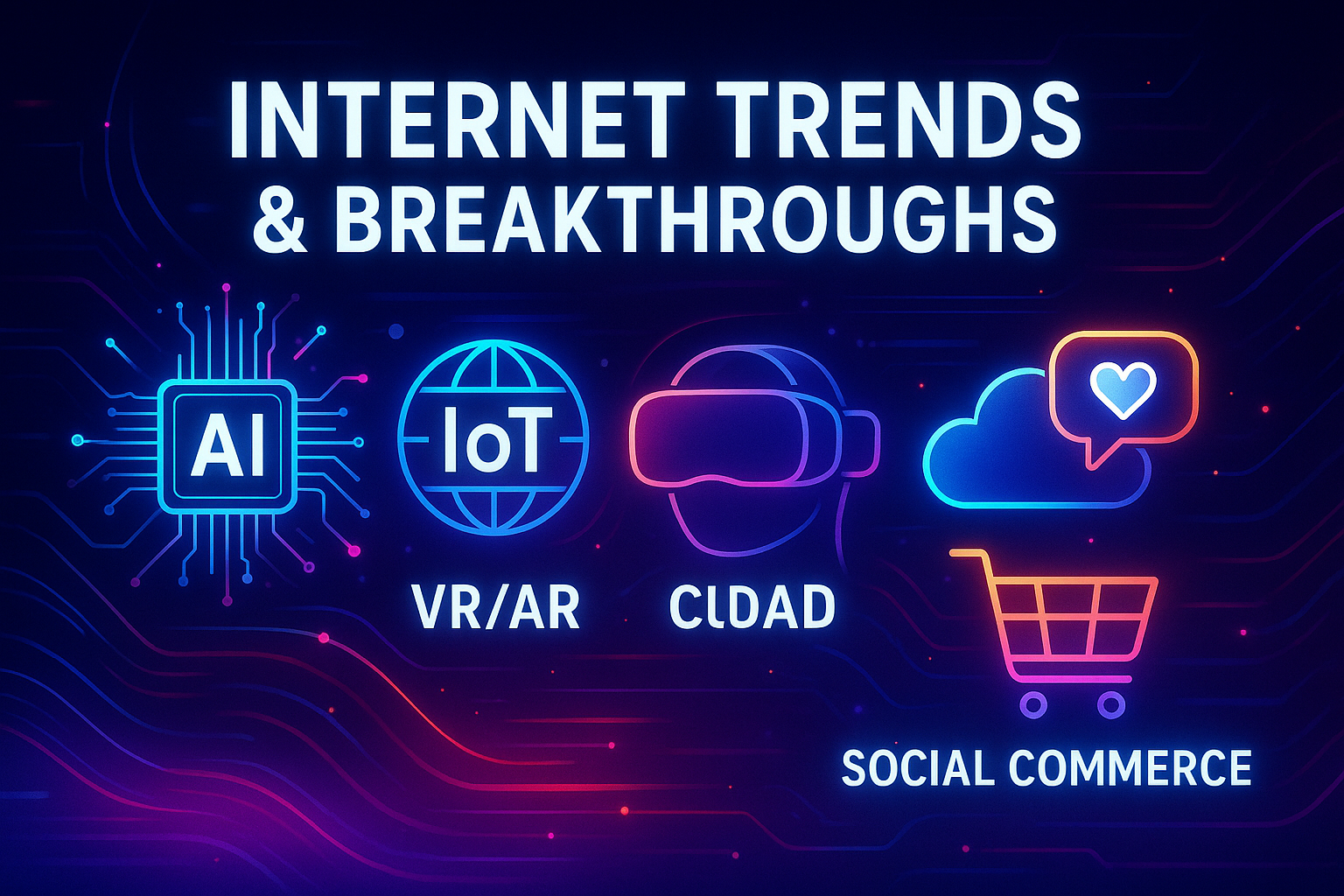
The internet continues to evolve, driving innovation, connectivity, and digital transformation.
Understanding the latest trends helps businesses and individuals stay ahead in a fast-paced digital world.
1. Growth of AI-Powered Applications
- AI tools are integrated into web services, apps, and platforms
- Chatbots, recommendation engines, and personalized content delivery
- AI enhances user experience, analytics, and automation
Impact: Transforms digital engagement and business efficiency.
2. Rise of Short-Form Content
- Platforms like TikTok, Instagram Reels, and YouTube Shorts dominate
- Quick, engaging videos capture attention in seconds
- Content creators adapt to fast-paced consumption habits
Impact: Influences marketing, entertainment, and social engagement.
3. Web3 & Decentralized Platforms
- Blockchain-based applications enable decentralized finance (DeFi), NFTs, and digital ownership
- Users gain more control over data and digital assets
- Promotes transparency, trust, and security
Impact: Redefines internet ownership and online transactions.
4. Cloud Computing & SaaS Dominance
- Businesses increasingly rely on cloud infrastructure and SaaS solutions
- Remote collaboration, data storage, and scalable apps become standard
- Cloud-based tools power AI, analytics, and enterprise solutions
Impact: Enables digital transformation and remote work capabilities.
5. Voice Search & Conversational AI
- Smart assistants like Alexa, Google Assistant, and Siri transform search behavior
- Businesses optimize content for voice queries and natural language processing
- Conversational AI improves customer service and engagement
Impact: Changes SEO strategies and enhances user interaction.
6. IoT & Smart Devices Expansion
- Connected devices in homes, offices, and cities collect and share data
- IoT applications in healthcare, logistics, energy, and entertainment
- Real-time monitoring improves efficiency and convenience
Impact: Creates intelligent, connected environments across industries.
7. AR & VR Experiences
- Augmented and virtual reality enhance gaming, shopping, and remote collaboration
- Digital marketing leverages AR/VR for immersive campaigns
- Education and training benefit from virtual simulations
Impact: Transforms how users interact with digital content and services.
8. Cybersecurity & Data Privacy
- Increased digital activity raises cybersecurity threats
- Advanced encryption, multi-factor authentication, and AI-driven threat detection
- Compliance with GDPR, CCPA, and other regulations
Impact: Protects users and businesses while building trust online.
9. Social Commerce & Digital Payments
- Shopping integrated into social media platforms grows rapidly
- Mobile wallets, buy-now-pay-later, and digital banking drive convenience
- Influencer marketing and e-commerce converge
Impact: Changes consumer behavior and online retail strategies.
10. 5G & High-Speed Connectivity
- Faster networks support streaming, gaming, AR/VR, and IoT devices
- Reduces latency and improves online experiences globally
- Enables new business models in remote work, healthcare, and smart cities
Impact: Powers the next generation of digital breakthroughs.
Conclusion
The latest internet trends and digital breakthroughs are shaping how we work, connect, and consume content.
Key takeaways:
- AI, AR/VR, and IoT enhance user experience and interactivity
- Web3 and cloud solutions transform ownership, collaboration, and business models
- Cybersecurity, digital payments, and 5G connectivity drive safe, efficient, and fast digital experiences
By staying informed and adapting to these trends, businesses and individuals can thrive in the ever-evolving digital landscape.
