

Introduction
The rollout of 5G networks is transforming connectivity and revolutionizing the way we live, work, and communicate.
With ultra-fast speeds, low latency, and massive device connectivity, 5G enables new opportunities in business, healthcare, education, and entertainment.
1. Ultra-Fast Internet Speeds
- 5G provides speeds up to 100 times faster than 4G
- Supports high-definition video streaming, gaming, and cloud computing
- Reduces lag and buffering for real-time communication
Impact: Enhances productivity and seamless connectivity for work and leisure.
2. Low Latency for Real-Time Communication
- Latency drops to as low as 1 millisecond
- Enables instant communication for remote work, AR/VR, and IoT devices
- Critical for applications like telemedicine, autonomous vehicles, and live streaming
Impact: Makes real-time collaboration and high-precision tasks possible.
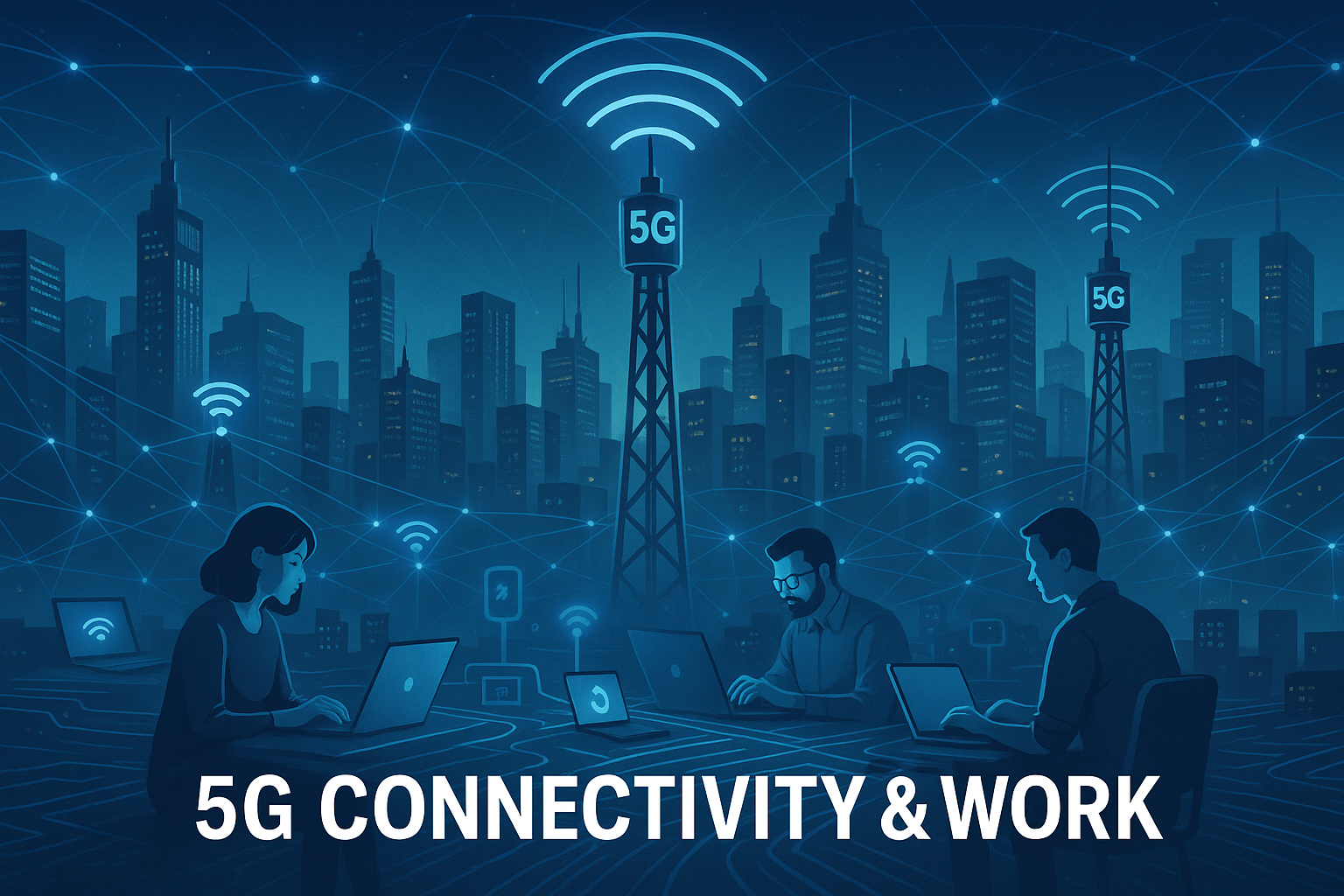
3. Enabling Remote Work & Collaboration
- High-speed networks support video conferencing, cloud platforms, and collaborative tools
- Professionals can work from anywhere without connectivity issues
- Facilitates global teams and digital nomad lifestyles
Impact: Redefines the modern workplace and enhances flexibility.
4. Empowering Smart Cities
- 5G connects IoT devices for traffic management, energy optimization, and public safety
- Smart sensors improve urban planning and efficiency
- Real-time data analytics supports proactive decision-making
Impact: Creates safer, more efficient, and sustainable urban environments.
5. Transforming Healthcare
- Remote surgeries, telemedicine, and real-time patient monitoring become feasible
- AI-powered diagnostics can analyze large datasets instantly
- Wearable devices transmit data seamlessly for healthcare professionals
Impact: Improves accessibility, quality, and efficiency in healthcare delivery.
6. Revolutionizing Entertainment & Gaming
- AR/VR experiences and cloud gaming rely on high-speed, low-latency connections
- Live streaming and interactive media become smoother and more immersive
- Reduces lag for multiplayer and real-time applications
Impact: Enhances entertainment experiences and creates new content opportunities.
7. Boosting Industrial IoT
- Smart factories and automated logistics require real-time connectivity
- Sensors, robots, and machinery communicate instantly for optimized operations
- Predictive maintenance and automation improve productivity and reduce costs
Impact: Drives Industry 4.0 and digital transformation in manufacturing.
8. Supporting Autonomous Vehicles
- Self-driving cars and drones need reliable, low-latency connections
- Vehicles communicate with infrastructure and other vehicles in real-time
- Enhances safety, navigation, and traffic management
Impact: Paves the way for safer, more efficient transportation systems.
9. Enabling Edge Computing
- Processes data closer to the source instead of centralized servers
- Reduces latency and improves response times for IoT and AI applications
- Supports faster decision-making for businesses and devices
Impact: Optimizes performance and efficiency in digital operations.
10. Expanding Global Connectivity
- 5G can connect rural and underserved areas more efficiently
- Bridges digital divides and promotes access to online education, healthcare, and services
- Supports worldwide digital inclusion
Impact: Makes the internet more accessible and equitable.
Conclusion
5G is not just a faster internet—it’s a catalyst for innovation, productivity, and connectivity.
Key takeaways:
- Ultra-fast speeds and low latency enable real-time collaboration and remote work
- Healthcare, smart cities, entertainment, and IoT are revolutionized by 5G
- Edge computing and global connectivity expand opportunities across industries
By embracing 5G, businesses and individuals can unlock new possibilities and redefine how we connect and work.