
Introduction
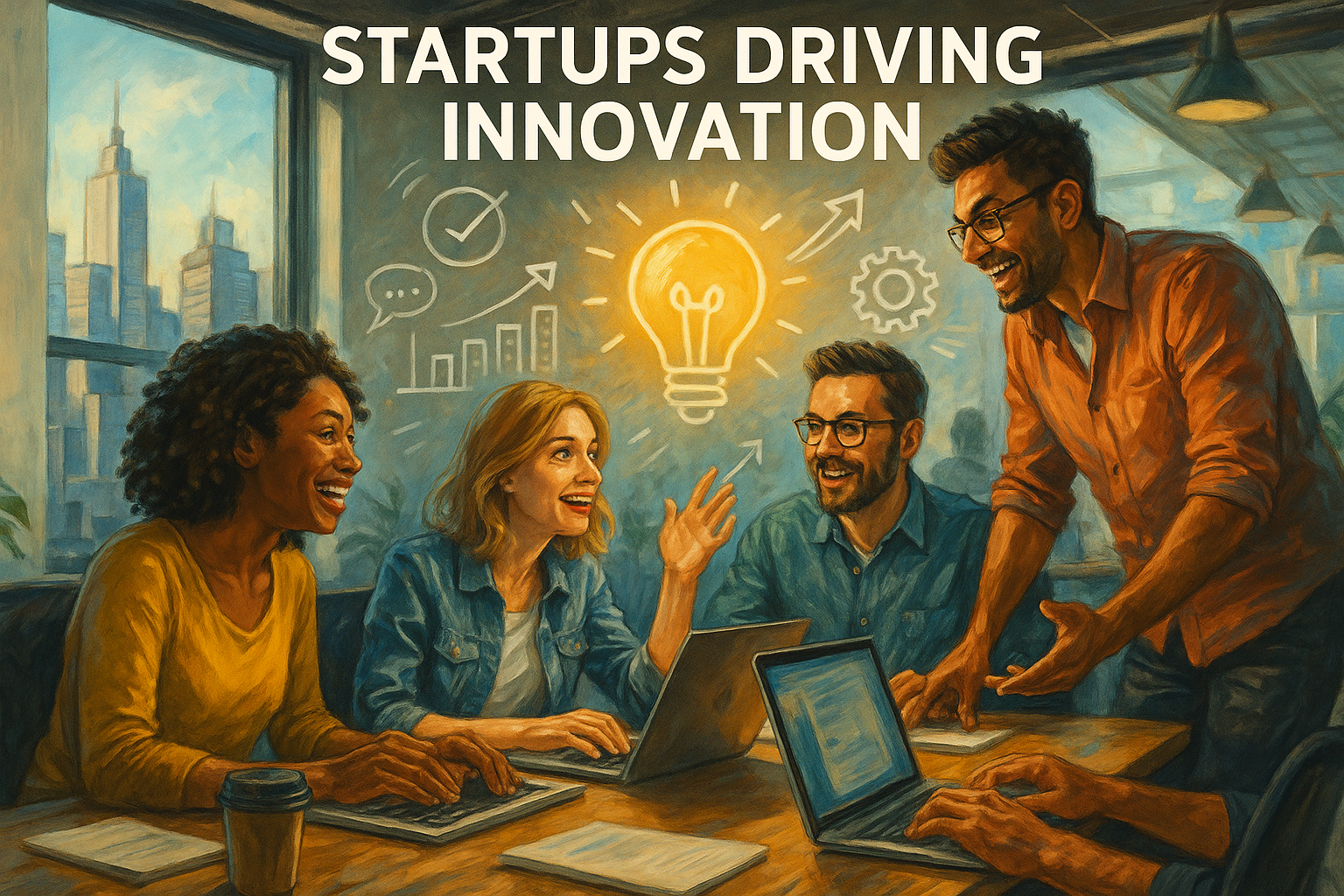
Startups are no longer just small businesses—they are engines of innovation that disrupt industries and shape global trends.
With agility, creativity, and risk-taking, startups are reshaping how we work, communicate, and solve problems.
1. Agile & Flexible Operations
- Startups adapt quickly to market demands
- Small teams make faster decisions than large corporations
- Rapid prototyping and iterative development encourage innovation
Impact: Accelerates product development and market responsiveness.
2. Disruptive Technologies
- Startups leverage AI, blockchain, IoT, and VR/AR to create new solutions
- Focus on solving gaps in existing markets or creating entirely new markets
- Example: Fintech startups revolutionizing banking and payments
Impact: Introduces breakthrough products and services globally.
3. Fostering Entrepreneurial Culture
- Emphasis on creativity, collaboration, and experimentation
- Encourages risk-taking and learning from failures
- Cultivates innovative mindsets among employees and stakeholders
Impact: Drives long-term innovation and industry evolution.
4. Global Reach & Scalability
- Digital platforms allow startups to reach global markets quickly
- Cloud computing and SaaS enable scalable operations
- Remote teams and international partnerships expand influence
Impact: Enables rapid global adoption of new ideas.
5. Solving Real-World Problems
- Startups address pressing challenges in healthcare, sustainability, and education
- Focused on creating value and impact rather than just profit
- Examples: Renewable energy solutions, telemedicine, and e-learning platforms
Impact: Contributes to social good while fostering innovation.
6. Collaboration & Open Innovation
- Startups partner with universities, corporations, and governments
- Open-source projects and shared platforms accelerate development
- Innovation ecosystems support idea exchange and collaboration
Impact: Encourages cross-industry innovation and knowledge sharing.
7. Investment & Funding Trends
- Venture capital, angel investors, and crowdfunding fuel startup growth
- Funding encourages research, development, and rapid scaling
- Global startup hubs attract talent and resources
Impact: Financial support drives technological and business breakthroughs.
8. Influence on Corporate Innovation
- Large corporations adopt startup strategies: intrapreneurship and innovation labs
- Partnerships with startups foster technology transfer and market insight
- Accelerates adoption of new trends in traditional industries
Impact: Amplifies innovation beyond startups themselves.
9. Technology-Driven Products & Services
- Mobile apps, SaaS solutions, AI platforms, and IoT devices
- Personalized and customer-centric innovations
- Quick adoption of emerging technologies keeps startups ahead
Impact: Sets new benchmarks for quality, efficiency, and convenience.
10. Shaping the Future Economy
- Startups create jobs, new industries, and economic growth
- Encourage innovation-led policies and infrastructure investment
- Foster competitive, dynamic global markets
Impact: Startups are crucial drivers of the global innovation ecosystem.
Conclusion
Startups are key drivers of global innovation, blending technology, creativity, and entrepreneurial spirit.
Key takeaways:
- Agile operations and disruptive technologies fuel rapid change
- Focus on real-world solutions drives societal and economic impact
- Collaboration, funding, and global scalability amplify influence
By supporting and learning from startups, individuals and businesses can stay ahead in an increasingly innovative world.