

Introduction
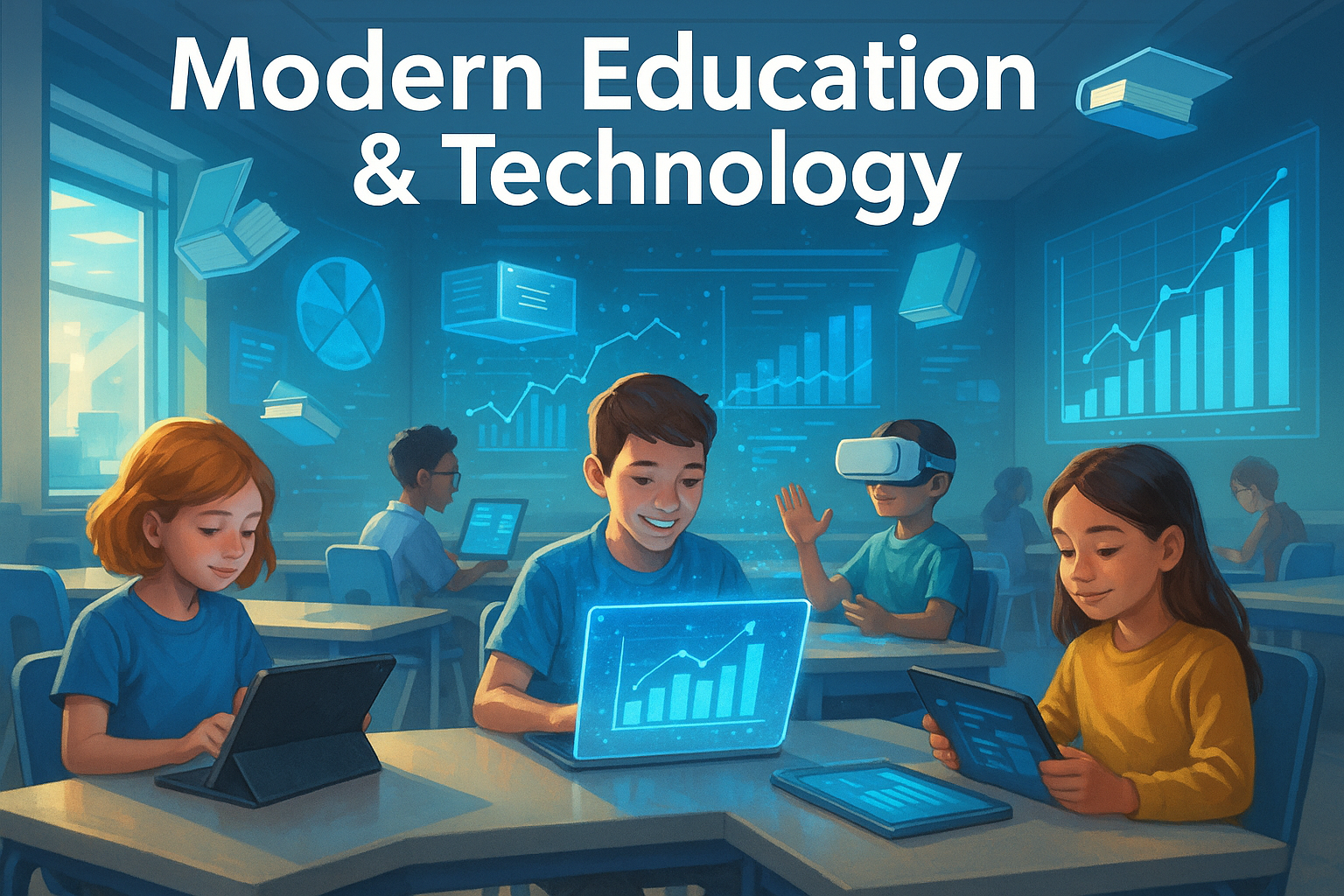
Technology is transforming education, making learning more interactive, accessible, and personalized.
From digital classrooms to AI-driven tools, modern education is evolving at a rapid pace.
1. Online Learning & E-Learning Platforms
- Platforms like Coursera, Udemy, and Khan Academy offer courses worldwide
- Flexible schedules allow learning at one’s own pace
- Interactive modules, videos, and quizzes enhance understanding
Impact: Education is accessible to anyone, anywhere, at any time.
2. Digital Classrooms & Smart Boards
- Smart boards and projectors replace traditional blackboards
- Interactive lessons allow real-time engagement
- Teachers can use multimedia content for better explanations
Impact: Enhances student participation and comprehension.
3. AI & Adaptive Learning
- AI analyzes student performance and adapts lessons accordingly
- Personalized learning paths cater to individual strengths and weaknesses
- Predictive analytics help identify students needing extra support
Impact: Maximizes learning outcomes and efficiency.
4. Virtual Reality (VR) & Augmented Reality (AR)
- VR allows immersive experiences like virtual field trips
- AR overlays information on real-world environments for interactive learning
- Subjects like science, history, and geography become engaging and hands-on
Impact: Makes abstract concepts tangible and memorable.
5. Gamification & Educational Games
- Learning through games increases motivation and engagement
- Points, badges, and challenges encourage active participation
- Platforms integrate fun with educational content
Impact: Makes learning enjoyable and fosters competition and collaboration.
6. Mobile Learning & Apps
- Smartphones and tablets provide access to learning on the go
- Educational apps support languages, coding, math, and more
- Offline capabilities ensure uninterrupted learning
Impact: Extends education beyond classrooms and school hours.
7. Cloud Computing & Collaboration
- Students can collaborate on projects using cloud tools like Google Workspace
- Easy sharing of documents, presentations, and research
- Real-time collaboration improves teamwork and productivity
Impact: Encourages interactive learning and digital literacy.
8. Online Assessments & Feedback
- Digital assessments provide instant feedback
- Teachers can track student progress and performance analytics
- Reduces grading workload and improves accuracy
Impact: Supports continuous learning and timely interventions.
9. Inclusive & Accessible Education
- Tools for differently-abled students, like screen readers and speech-to-text
- Subtitles, translations, and adaptive content make learning inclusive
- Technology bridges gaps in education accessibility
Impact: Ensures equal learning opportunities for all students.
10. Preparing Students for the Future
- Technology literacy becomes a core skill for modern careers
- Encourages critical thinking, problem-solving, and creativity
- Integrates STEM, coding, AI, and data analysis into curriculums
Impact: Prepares students for a technology-driven workforce.
Conclusion
Technology is redefining education by making learning more accessible, interactive, and personalized.
Key takeaways:
- Online platforms and apps bring flexibility and accessibility
- VR, AR, AI, and gamification enhance engagement and retention
- Collaboration, inclusivity, and future-ready skills are now central
- Educators and students must embrace technology responsibly
By leveraging modern technology, education can unlock the full potential of students and prepare them for the future.